जताततै नक्सलबारी

तुहिएको सपनाको कुनै गन्ध हुन्छ कि हुँदैन ? धेरैले सपाट उत्तर दिनेछन्, सपनाको कुनै गन्ध हुँदैन । कसैलाई लाग्न सक्छ यो प्रश्न आफैंमा सिजोपनिक छ ।

आक्रोशले उमालेको कफी

कम्तीमा ८ घन्टा काम, ८ घन्टा आराम र ८ घन्टा किताब र कफीलाई दिने सुबिस्ता सबैलाई पुगोस् भन्नका लागि मसँग नेपाली र अंग्रेजी दुईटा भाषा छन् । शासकहरूसँग कति नाले बन्दुक छन् ?

Showing posts with label Profiles. Show all posts

Thursday, August 29, 2013

व्यक्ति : सिक्किमको नयाँ लेखक

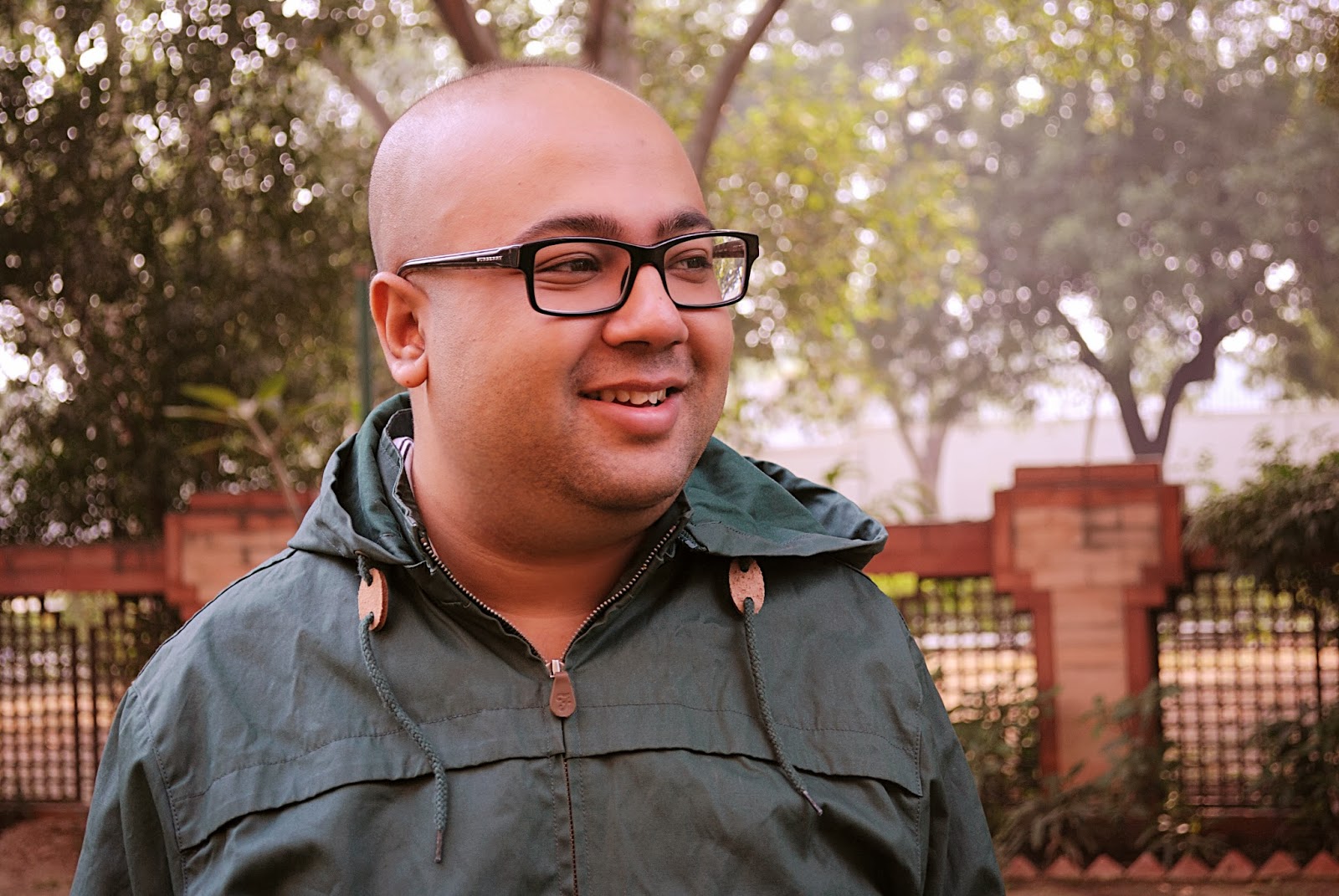
Profile: Prajwal Parajuly, the author of The Gurkha's Daughter

योजनाका ठोस बुँदाहरू पछ्याउँदै हिँड्दैन जिन्दगी । जिन्दगीका योजनाहरूको त्यस्तो फाइल पनि हम्मेसी राखिँदैन जसलाई घरी घरी पल्टाएर हेरिरहुँ । प्रज्वल पराजुलीको जिन्दगीले पनि अनिश्चित र बांगोटिंगो बाटो समाएर हिँड्नुपर्ने नियति भोग्यो । सोझो रेखामा खुरुखुरु हिँड्थ्यो भने यी पराजुली ठिटाकोे कथा लेख्ने जाँगर सायद हुँदैन थियो । भारतमा चलेका सबैजसो ठूला पत्रिकाले उनका फोटो टाँस्ने र उनले बोलेका शब्दलाई छाप्ने लेठो सायदै गर्थे । तर आज भने यी सिक्किमेली ठिटालाई भ्याइनभ्याइ छ । कति पत्रकारलाई अन्तरवार्ता दिन भ्याउँदिन भन्नुपर्दा उनी चुकचुकाउँदैछन् । उनैलाई सुन्न कार्यक्रम आयोजना गर्छु भन्ने शुभेच्छुकहरूलाई समय छैन भन्नुपर्दा खल्लो महसुस गरिरहेका छन् । पराजुली भर्खरै प्रकाशित कथासंग्रह 'गुर्खाज डटर'का लेखक हुन् । लन्डनमा कोर्कसले र भारतमा पेन्गुइनले सो संग्रहको प्रकाशन गरेका हुन् । 

पुस्तक लोकार्पण गर्न दिल्ली आएका पराजुलीलाई भेट्न मित्र दिनेश काफ्ले र म सिक्किम हाउस पुग्दा पनि उनी फोनमा व्यस्त थिए । मीठो सिक्किमे लवजमा उनले हामीसँग भने, 'मलाई नो भन्न कस्तो अप्ठ्यारो लाग्छ कि, तर टाइम मिलाउनु पनि त सक्दिन हो !' फरासिलो स्वभावका पराजुलीले शुद्ध नेपाली भाषामा बोल्ने ठूलो यत्न गर्दै हामीसँग लगभग डेढ घन्टा बिताए । अस्ति अक्टोबर २४ मा २८ वर्ष पुगेका उनले सिक्किमदेखि लन्डनसम्मका घटनापूर्ण यात्राको कथा हाले । अलिकति लेग्रो मिसिएको सिक्किमेली भाका र बीच बीचमा घुस्ने अंग्रेजी वाक्यहरूमा सुनिने खास्सा बि्रटिस लवजमा भनिएको उनका कथा सिक्किम हाउसको प्रख्यात प|mाइड मोमोभन्दा मीठो थियो ।   

सन् २०१० अपि्रलको कुनै एक दिनको कुरा हो । ज्वालामुखीको खरानी लन्डनको वायुमण्डलभरि उडिरहेका थिए । जहाज उडानहरू रद्द भएका थिए । बाटामा हिँड्नसमेत गाह्रो भइरहेको थियो । लन्डन बुक फेयरमा हिलारी मेन्टल बोल्न आउने कार्यक्रम थियो । प्रज्ज्वल झोला बोकेर निस्किए, मेन्टललाई सुन्न । त्यस बेला अक्सफोर्ड युनिभर्सिटीमा क्रिएटिभ राइटिङ पढ्न आवेदन दिएका थिए । उनलाई लाग्यो, मेन्टललाई सुन्दा अक्सफोर्डको प्रवेश परीक्षा उत्तीर्ण गर्न केही सहयोग नै पुग्ला । मेन्टललाई त सुने तर ज्वालामुखीको राखकै कारण बुक फेयरका अरू सबै कार्यक्रम रद्द भयो । राम्रा कार्यक्रमहरू हेर्न नपाएकाले दिक्क मान्दै फर्केकी एक महिलासँगै ट्रेनमा बस्न पुगे उनी । गफ गर्ने मेसोमा ती महिलाले आफूलाई लिटररी एजेन्ट भएको बताइन् । झोलामा बोकिराखेको आफ्नो एउटा कथा हेर्न भनी तिनै एजेन्टलाई थमाए उनले । त्यसबेला उनलाई हेक्का थिएन, यसै विन्दुमा उनको जिन्दगीले एउटा ठूलै मोड लिइसकेको थियो भन्ने । केही दिनपछि नै सुसन इयरउड भन्ने ती महिलाले उनका अरू कथा पढ्ने मन भएको बताइन् । अन्य केही कथा पठाइदिए । अक्सन चल्यो, कोर्कस जस्तो ठूलो प्रकाशन गृहले उनका कथाहरू छाप्ने निश्चय गर्‍यो । त्यति मात्रै हो र ? उनको अर्को उपन्यासका लागि पनि पाण्डुलिपि नै नहेरी उनलाई एड्भान्स दियो । अर्को वर्ष यसै समयमा उनको 'ल्यान्ड ह्वेर आई फ्ली' नामको उपन्याससमेत बजारमा आउनेछ । उनले लेख्ने काम सिध्याइसके । 

जसै यो खबर बाहिर आयो, एकपछि अर्को गर्दै भारतका सबै पत्रिकाले उनका बारे स्टोरी छापे । 'टाइम्स अफ इन्डिया'देखि 'दि हिन्दु'सम्मका पाठकले एक युवा लेखकको उदय हुँदै गरेको खबर पढे । कपाल नभएको टाउको सुम्सुम्याउँदै भने, 'त्यसपछि एक दिन बिहान उठेर फेसबुक खोल्दा त एकैपटक ७० भन्दा बढी पे|mन्ड रिक्वेस्ट आएको थियो । म त छक्कै परें नि !' 
उनले थपे, 'ला..किताब आएकै छैन, यत्रो हाइप भइसकेछ । अलि अलि डर पनि लाग्यो हो । तर पढ्नेहरूले राम्रो भनेका थिए ।' आफ्नै भाकामा उनले खुलेर त्यस बेलाको अनुभूति सुनाए । पश्चिमका र भारतका समेत अंग्रेजी भाषा पढ्ने पाठकलाई उनले आफ्ना कथाहरू मार्फत नयाँ संसारको परिचय दिएका छन् । पूर्वाेत्तर भारत, दार्जिलङ, भुटान र नेपालका नेपाली भाषीका कथा लेखेका छन् उनले । काठमाडौंका सासूबुहारीका सम्बन्धका पहेली, कालिम्पोङमा पसल गरेर गुजारा गर्ने मान्छेको दोधारे मनस्थिति, दार्जिलिङमा मनाइने हिन्दु चाडमा भएको मारकाट, नेपाली भाषी भुटानी शरणार्थीको व्यथा, गोर्खाली लाहुरेकी छोरीले उसकी बाबुलाई बुझ्न गरेको प्रयत्न लगायतका विषयहरू उनका कथामा छन् । यसअघि भारत र अन्य भेगमा रहेका नेपालीभाषी समुदायका कथाहरू बाहिरी दुनियाँमा बिरलै पुगेको छ ।      

अब यस संग्रहलाई नेपाली भाषामा अनुवाद गर्ने जमर्को गरेका छन् उनले । तर उनको नेपाली भाषामाथिको पकड अभ्यासको कमीले कमजोर हुँदै गएकाले अनुवादका लागि बा आमाको सहयोग लिएका छन् । बीसी शर्मा र सरला भट्टराई आजकल जोडतोडले छोराका अंग्रेजी कथालाई नेपालीमा अनुवाद गर्न लागेको उनले दंग पर्दै सुनाए ।

यो त भयो सन् २०१० पछि अग्लिएको उनको करियर ग्राफ । तर त्यहाँसम्म आइपुग्न उनले गरेको यात्रा कम रोमाञ्चक छैन । 

कालिम्पोङमा जन्मेर उनी सिक्किममा हुर्के । परिवार ठूलो थियो । काका काकी, हजुरबा, हजुरआमा, सबै भएको सगोल परिवार थियो । भात भान्सा एउटै, आर्थिक मामलो पनि सगोलमै । उनले सगोल परिवारको आफ्नो हुर्काइलाई एक वाक्यमा संश्लेषण गरे, 'इट टिचेस यु टु बी अ सर्भाइभर ।' अर्थात् जिन्दगीका जटिलतासँग परिचित हुँदै जिउन सिकाउँछ । त्यसैले होला, उनले सहजै सानी नोकर्नी, बूढी सासू, तरुनी विधवा, बूढा लाहुरे र अनेक किसिमका पात्रहरूको चित्रणमा आफूलाई खरो उतारेका छन् । तर, सबभन्दा रमाइलो त के भने उनको घरमा सबै पढन्तेहरू थिए । सबै लेख्नसमेत सक्ने ल्याकत भएका । बुबा न्यायाधीश, काका वकिल, काकी नेपाली भाषाकी समाचार वाचिका, दिदीहरूसमेत उत्तिकै लेख्न र पढ्ने रुचि भएका । उनले भने, 'म नेपाली र अंग्रेजी उत्तिकै लेख्न र बोल्न जान्दथें । स्कुलमा हुने दुवै भाषाका डिबेटमा बोल्थें ।' 

यी यावत् अनुभवहरू उनलाई लेख्ने क्रममा कतै न कतै काम लागे होलान् । तर, सानो हुँदा पढेका पुस्तकहरूका असरचाहिँ उनको लेखनीमा पटक्कै नभएको बताउँछन् । न अंग्रेजी न नेपाली, कुनै भाषामा पढिएका साहित्यको त्यस्तो स्पष्ट प्रभाव आफूमा नभएको जिकिर छ उनको । तर, उहिल्यै पढेका भानुभक्तका कविता उनलाई अझैसम्म मुखस्त छ । हाम्रा अघिल्तिर उनले 'भर जन्म घाँसतिर' भन्दै सुरु गरेर, भानुभक्तका दुइटा पूरै कविता सुनाए । उनले गुरुप्रसाद मैनालीको 'छिमेकी' कथाका पंक्तिहरू पनि खुरुखुरु भन्न थाल्दा दिनेशका आँखिभौं एक बित्ता माथि पुगेका थिए । देवकोटा, सुधपा, इन्द्रबहादुर राई, सानु लामा र वीरविक्रम गुरुङका लेखनीका कुरा गरेर आफ्ना वरिपरिका नेपालीभाषी लेखकहरूब्ाारे राम्रै जानकारी राखेको पुष्टि गरे । 

अघिल्लो साँझ भएको पुस्तक लोकार्पणमा उनले नेपाली भाषाबारे टिप्पणी गर्दै भनेका थिए, 'नेपाली भाषामा काफी साहित्य लेखिएको छ । अहिले त त्यो क्रम अझै बढेको छ । हरेकपटक घर जाँदा थुप्रै नयाँ लेखकहरू आफ्ना नयाँ कृति लिएर अगाडि आएको मैले देखेको छु । अंग्रेजी पढ्ने नयाँ पुस्तामा भने नेपाली भाषा जटिल भएको र लेख्न गाह्रो भएको भन्ने बुझाइ छ । त्यसैले यसलाई सजिलो बनाउनुपर्छ । ह्रस्व दीर्घको अनेक जटिल झन्झट लगाउनु हुँदैन ।' यति भनेर उनले आफ्नै कथाको नेपाली अनुवादबाट केही अंश पढेर सुनाएका थिए । इन्डिया इन्टरनेसनल सेन्टरको सेमिनार हलमा भेला भएका विभिन्न क्षेत्र र भाषाका दर्शकले ताली बजाएर उनको यो प्रयत्नको स्वागत गरे । 

१८ वर्षको उमेरदेखि अमेरिका बसेका उनले कम्युनिकेसन मेजर लिएर स्नातक गरे । त्यसपछि भने भिलेज भ्वाइस नामको पत्रिकामा विज्ञापन शाखामा काम गरे । तर न उनलाई आफूले अध्ययन गरेको विषयले चित्त बुझेको थियो, न उनले गर्ने कामले कुनै सन्तुष्टि दिन्थ्यो । काम झिंझोलाग्दो बन्न लागेपछि उनले अरू कुनै योजना नबनाई चटक्कै छाडिदिए । अब अगाडि के गर्ने भन्ने उनलाई कुनै हेक्का नभएको बेला, अमेरिकी रुममेट लिएर उनी भारत आए । भारतका विभिन्न सहर घुमे । घुम्ने क्रममा उनको रुममेट सन मोहिनी ह्यानले ब्लग लेख्न थाल्यो । साथीले लेख्न गरेको प्रयत्नबारे उनी भन्छन्, 'विचरा, एकाउन्टेन्ट मान्छे, कहिल्यै केही नलेखेको । तर जबरजस्ती भए पनि लेख्थ्यो उसले ब्लग । परिवार र साथीहरूलाई आफूले देखेको कुरा भन्न ।' त्यसै बेला उनले पनि आफ्ना अनुभूतिहरू लेख्न थाले । उनलाई लेखनका तकनिकीहरू थ्ााहा थियो । उनले राम्रैसँग आफ्ना अनुभवहरू फेसबुकमा लेख्न थाले । भारतका थुप्रै सहरहरू घुमेर उनको साथी फक्र्यो । भर्खरै जागिर छोडेका उनलाई फर्किन मन भएन । फेरि उनी मनालीतिर हानिए । कारण उनीसँग केही काम थिएन । र जसको जागिर वा अरू कुनै उद्यम छैन, त्यसैलाई मान्छेले तिमी के गर्दै छौं आजकल भनेर सोध्ने गर्छन् । त्यसउपर, कुनै आफन्तको केही सानातिना काम पर्‍यो भने, पहिल्यै सम्भिmने बेरोजगारलाई नै हो । यी सब भोगेपछि आफ्नो बेकामेपनलाई अरूका नजरबाट लुकाउन उनले लेख्ने विचार गरेर मनाली जाने निधो गरे । त्यसबेलासम्म त्यो लेखनको फिलिंगो उनको मस्तिष्कमा रापिलो बनिसकेको थियो । मुस्कुराउँदै भन्छन्, 'मैले लेख्न थालेर खासमा मेरो बेकामेपनलाई लेजिटिमाइज गरेको हुँ ।'  

मनालीमा राज नामको होटलमा बसे । एउटा कथा त्यहीँ लेखे । तर त्यस्तो जाडोमा नुहाउनलाई तातो पानी पनि नपाइने होटल थियो त्यो । उनले फेरि घर सम्झेछन् । 'होस बरु घरमै बसेर लेख्छु अरू कथाहरू भनेर ग्यांगटोक फर्किएँ ।' अरू केही कथाहरू घरमै बसेर लेखे । र एक दिन ती सबै कथाहरू झोलामा राखेर उनी हानिए लन्डन । यसपालि बेकामेपनलाई 'लेजिटिमाइज' गर्ने बहाना थियो अक्सफोर्डमा पढ्ने ।  

साहित्यिकहरूलाई आपसमा दाँज्ने चलन छ । 'गुर्खाज डटर' बाहिर आउन नपाउँदै प्रज्ज्वललाई पनि कसैले सलमान रुस्दीसँग त कसैले झुम्पा लाहिरीसँग दाँज्न भ्याइसकेका छन् । तर, उनलाई दाँज्ने मात्रै होइन खुलेर प्रशंसा गर्नेको पनि ओइरो नै लागेको छ । 'दि हिन्दु'ले त ठोकेरै लेखिदियो, 'पराजुली खस्किँदो साहित्यिक कथा विधालाई पुनरुत्थान गर्ने सामथ्र्य भएका लेखक हुन् ।' यो सब देखेर उनी रमाउनुभन्दा बढी आश्चर्यमा परेका छन् । 

प्रशंसाले चुलिएर हावामा तैरिनबाट जोगिएर उनी अहिले धर्तीमै रहने प्रयत्न गरिरहेका छन् । त्यसै गरेर भारतको नेपाली भाषी समुदायले उनलाई आफ्ना राजनीतिक मुद्दाहरू बोलिदिने प्रवक्ताका रूपमा समेत बुझ्न थाल्ने सम्भावना छ । उनीहरूको अपेक्षा हुनु त सामान्य हो । तर केही पत्रिकाहरूले समेत उनलाई त्यसै विषयमा प्रश्नहरू सोध्न थालेका छन् । उनलाई अहिले केवल लेखक हुने रहर छ । उनको स्पष्टोक्ति छ, 'एक्टिभिस्ट हुने वा राजनीति गर्ने भन्ने मैले सोच्दै नसोचेको कुरा हो । नेपाली भाषा बोल्नेहरू हिरो पनि छन्, भिलेन पनि छन्, मैले तिनीहरू सबैको कथा मात्रै लेख्ने हो ।'  

प्रज्वल लेखक नै बन्नलाई कुनै योजना बनाएर लामो यात्रामा निस्किएका होइनन् । उनका स्पष्टोक्तिहरूबाट थाहा लाग्छ, उनी कतै संयोगले र कतै उनको स्वभावले धकेलिएर लेखक बनेका छन् । भविष्यमा पनि लेख्नेबाहेक उनको केही योजना छैन । हामीसँगको संवादमा उनले एउटा वाक्य निकैपटक दोहोर्‍याए मानांै उनले लेख्ने दौरान सिकेको गुह्य त्यति नै हो- 'लेख्न सजिलो छैन ।' आफूभन्दा पछि आउने पुस्ताले पनि यति बुझिदेओस् भन्ने उनको चाहना रहेको बुझिन्थ्यो । उनलाई लाग्छ फेसबुकमा दुई चार मीठा वाक्य लेख्ने अनि लाइक गनेर बस्नेले लेखनमा उन्नती गर्न सक्दैन । अन्तिममा हामीले सोध्यौं, 'तपाईं त भाग्यमानी हुनुभयो, संयोगवश एजेन्टसँग भेट भयो र तपाईंको प्रकाशन हुने मौका जुर्‍यो । तर लेख्न चाहने अरू युवाले पछ्याउनुपर्ने कुनै खास बाटो छ ?' उनले मौलिक लवजमा ती लेखक बन्न चाहनेलाई भने, 'सबैलाई लेख्न सक्छु जस्तो लाग्छ तर लेखेर देखाउनु अप्ठ्यारो छ । मेरो परिवारका सबै सदस्यलाई आफू लेखक हुन सक्छु भन्ने लाग्छ । खै त कसैले लेख्दैन । काकीले एउटा कविता संग्रह निकाल्नुभयो अनि मैले लेखें । सबभन्दा पहिला लेख्नु त पर्‍यो नि हौ । सक्दो राम्रो लेख्नु, अनि सोच्नु अरू कुरा !' 

प्रकाशित मिति: २०६९ मंसिर १६ १०:२९ (कान्तिपुर दैनिक )

The living archive

 A passage which leads to the study room of Shiva Regmi has been narrowed by tables and shelves full of books. The room adjacent to his study and the one opposite to it are packed too. As I enter his study, I ask him how many books he owns. “More than 10,000,” he says. But to my astonishment, his study includes several magazines stacked in shelves and spread across the floor and table. “I have almost every issue of nearly 100 Nepali literary magazines,” he adds. The 69-year-old writer—also a renowned researcher of Nepali literature—is currently completing a comprehensive history of Nepali literary magazines. In doing so, he is also analysing the roles played by these magazines in the development of Nepali literature.
A habit of collecting and reading books and magazines led Regmi to edit and write books on Nepali literature. His edited works include Gorkhapatra Kaa Ek Saya Ek Nibandha—a collection of 101 essays published in Gorkhapatra from 1968 to 1999, where one can find literary writings of poet Siddhi Charan Shrestha, memoirs of Narayan Gopal, and the spiritual deliberations of Yogi Narahari Nath. Regmi also edited Shankar Lamichhane ka Nibandha and Bhupi Sherchan ka Kabita, where he anthologised Lamichhane’s essays and Sherchan’s poems that were published in magazines, but never collected otherwise. “Future readers of Nepali literature will be devoid of these gems if they are not collected now,” he says.
Encyclopedias that track the evolution of Nepali literature is no doubt lacking in current archives. “But we do not have to worry as long as we have Shiva Regmi,” says journalist Devendra Bhattarai, who considers Regmi a source for writing stories on Nepali literature. Regmi possesses the first issues of magazines like Sharda, Yugbani, Garima, and Madhuparka which are historically important as they heralded modernity in Nepali writing. His amazing collection also includes the first work by the first Nepali translator Gambhir Dhoj Shah, which was published in 1914. These magazines and books surround Regmi in his study, where he shuts himself away to write from 10 am till 2 pm. “These books and magazines are my friends and I am addicted to reading or writing about them,” he says.
Regmi remembers the days when he used to buy Madhuparka for Rs. 1.25—a sum difficult for him at the time. He lost his mother when he was three and his father passed away when he was nine. Born in Kathmandu in 1941, Regmi did his schooling from Juddhodaya Public High School in 1958 and started teaching in a primary school. But after teaching for four years, he left the job to volunteer in public libraries. “I volunteered in Nabin Bikash Mandal Library of Thamel and also in the Rastriya Pustakalaya in Pyukha where I used to sit all day to read,” he says.
After passing the SLCs, he did not enroll in college and did not hold a job for nearly three years. The only thing he did was read. As financial conditions at home became worse, he joined the Ministry of Law as a clerk. But without a formal university degree, Regmi found it difficult to get promoted. He thus joined National College for an Intermediate degree with history as his major, and later attained a Master’s degree in Nepali literature. Regmi additionally earned a B.L. (Bachelor’s in Law) degree and eventually became vice-secretary in the government, working in several ministries including the office of the Prime Minister. He retired from government office after serving nine years at the Election Commission. “In Nepal’s bureaucracy, people are not allowed to work. They are encouraged to waste time talking. I was not interested in that, and so I used to read books wherever I worked,” he adds.
While many readers and scholars of Nepali literature know him as a researcher, very few know him as an ex-administrator. Regmi thinks that his passion for reading and research has added more value to his life than his career with the government. Today, he continues to read good writings published in decades-old magazines. This piques his interest in researching those writers, thus bringing to us information about those who had talent but could not become popular. “I have received calls from relatives of the writers I surface, who thank me for reminding Nepali readers about them,” he says.
Regmi has realised that there are very few people who understand the value of writing in Nepal. Though he wants the government to understand the importance of literature and to preserve the books and magazines collected by writers like him, he does not want to handover his own library unless assured of its preservation. Pointing at his numerous books and magazines, he says, “I am worried what these good friends of mine will do after I am gone from this world.”
Posted on: 2011-03-26 10:02 (The Kathmandu Post)

The experimentalist

A good writer kneads language the way he wants, and uses the language to create parallel worlds, worlds where reality is bypassed at every step. Sixty-seven-year-old Dhruva Chandra Gautam, widely known in Nepal as Aakhyan Purush (‘master fiction writer’), has mastered both these qualities in his fiction. He has experimented with varieties of structures, attempting to bring out something new in each of his 25 novels, including four co-authored ones. He continues to churn out new fiction, still experimenting with form, content, style, and theme in each of his works. And yet, Gautam says, he hasn’t had enough.
Gautam’s works are a clear departure from traditional styles of novel-writing. From his first novel Antya Pachhi (1966) to his latest work Apriya (2010), he tries to experiment with language and form. For example, his novel Phool Ko Aatanka is a collection of 126 disparate events that have no apparent connection with each other. Yet, the work depicts the fragmentation and disjunction of modern man’s life. He picks up serious issues, but weaves them using a tapestry of surrealism to make them even more relevant. In his most-acclaimed work Alikhit (1990), the entire Birhinpur Barewa village of the Tarai disappears, and the village pond transforms into a man ready for battle. Critic Govinda Raj Bhattarai writes in his foreword to the English translation of Phool Ko Aatanka, “Gautam is the first experimental novelist in Nepali literature.” Not only Bhattarai, almost all Nepali critics call him Prayogbaadi (experimentalist). Gautam, however, shies away from this label. He isn’t comfortable with the suffix “ism”. “Experiment is rather an attempt for novelty and is the attitude of a writer.”
Sometimes, Gautam leaves surreal realities to create parodies, like in Bhimsen-4 ko Khoji (2003), where the Pandava brother Bhima is reborn in current Nepal. The work satires Nepali political actors and is infused with dark humour that scoffs at political and social evils.
One may believe Gautam sets out with an agenda to experiment, but that is not always true. Although he draws his themes from the people he encounters and the times he lives in, he does not start writing unless a “lightening occurs in the mind”, a sort of epiphany that flashes in his “inner eye.” These epiphanies become short stories or novels. “You never know when that lightening occurs. Fortunately, that has never ceased to occur for me. And I have enough themes in my mind to develop into novels,” Gautam says, giving us a glimpse into the mind of one of the most prolific writers of Nepal. Gautam has written more than three dozen books, including short stories, memoirs and plays. He is now writing his 26th novel.
I ask him how someone can be so prolific at his age. Reflecting upon one of his hobbies, Gautam refers to Indian veteran actor Dev Anand’s quote: “A child is born young, becomes mature, then dies.” Gautam lets out a laugh, then adds, “Though I have matured, I haven’t grown old.”
Born in Betaini of Bara district in 1944, Gautam was raised in Birgunj, where he studied at Tri Juddha High School. His mother died when he was seven, perhaps a reason why he always ponders over the futility of life. His writings continue to reflect an existential angst, which consistently lingers in the background. His extensive reading of existentialist writers like Camus, Sartre, Heidegger, and absurdist playwrights like Beckett and Ionesco during his college days have also contributed in making his initial writings quite nihilistic.
When he was young, he read literature, watched films, and sang songs--all in Hindi. “We were taught all subjects in Hindi in our school,” says Gautam. He wrote his first poem in Hindi and was initially published in a Hindi magazine called Utkarsha. Gautam often corresponded with the Indian writer Sarveshwor Dayal Saxena, who helped publish Gautam’s writings. But then his brothers Dhanus Chandra Gautam, known as Dha Cha Gotame, and Gopal Gautam—who wrote as Gopal Gotame—had already started writing in Nepali. Due to their influences, he started writing Nepali poetry in 1961, writing one poem every day that entire year. Though not a single one was published, he honed his talent this way. As his confidence rose, he began attempting to write novels. He wrote two unpublished novels: one of them was titled Chaar Tukraa Mutu (Heart Broken in Four Pieces). This naïve and clichéd title suggests the heavy influence Hindi films had on him. “I soon realised that my first works were quite weak as they came out merely as influences of those writers I had read and the films I had watched,” he says.
Gautam’s lifelong affection to Hindi films began from his school days. He usually bunked school to go to Raxaul’s cinema halls. “I watched three different films in three different halls in a day,” he says. He continues to watch films even today, rattling off names of recent releases he has watched.
Gautam came to Kathmandu in 1962 to pursue his higher studies, and began working in a bookstall called Educational Enterprises just off Mahankal before joining Gorkhapatra as a proof-reader. With just Rs. 120 as a monthly salary, the job was not only tedious but also reminded him how futile life was, igniting further existential anxieties in his mind. “The night duty of proof-reading was so festering that I ended up writing many dismal poems,” he says. But it was a time well-spent, for he spent his entire day reading influential Western writers in the Capital’s many libraries at the time.
Meanwhile, after much persuasion from writer Uttam Kunwar, Gautam finally came up with a 68-page novella, Antya Pachhi, for the literary magazine Ruprekha. Gautam had finally established himself as a Nepali writer of unique capabilities. While he taught at government and private colleges as a means of income during this time, he never looked back from the publication of his first work. Among Gautam’s achievements are also writing scripts for films, albeit for a film based on his own work. He wrote the script for Basudev (directed by Neer Shah) which was based on his novel Kattel Sir ko Chotpatak.
“Gautam is the stop that all those who aspire to write fiction must rest at for a while. These writers must read his works like Kattel Sir ko Chotpatak before heading on to write their own works,” says writer Khagendra Sangraula. Sangraula is, however, critical of Gautam’s prolificacy and his recent works.
“He is still focused on experimenting with new techniques but has failed to do justice to his recent works,” Sangraula adds. Gautam has heard the criticism that has been levelled at him, but still feels he has been evolving as a writer. “I write about man, society and the times we live in. Since they are going through rapid changes, I experiment to keep myself in tune with the changes.”
Gautam has been witness to tremendous changes in Nepali society, and his experimentations have captured a different side of society: a surreal, non-linear world where the real and the unreal collide. His evenings are filled with a celebration of life, songs and shayari recited by him and his friends, over pegs of whiskey. But Gautam continues to move on, bringing new flavours to Nepali writing as he moves ahead with the times.
Posted on: 2011-04-09 09:41 (The Kathmandu Post)

Life in three dimensions

Eighty-four-year-old Indra Bahadur Rai is reading Albert Einstein as I walk into his living room in Siliguri. Here to escape the brittle cold of Darjeeling, where he lives rest of the year, Rai is deeply engrossed in the theory of relativity, and attempts to draw a comparison between scientific and literary theory. His example is drawn from Heisenberg’s uncertainty principle, which he says “applies to poetry as much as it applies to physics.”
Scientific theories aside, Rai’s entire literary career has been based around expounding two literary movements that have shaped Nepali writing from the East since their inception. Rai is the most famous proponent of the literary theory known as Aayameli, which asks readers to understand a character through all three dimensions—in this case, it means a character is not just how he or she speaks or behaves, but is instead the sum of the whole. In Rai’s own words, “Man is not just made of his eyes, his ears, or his mind. He is rather the sum of all his organs, heart, and mind.” Rai’s illustrious writing career spanning five decades has attempted to understand humanity in its entirety, and not just by its pieces. His writing brought forth a refreshing wave in Nepali literature, a wave that sought to break down traditional narrative structures, giving writing a three-dimensional shape. Rai’s works, basically, sought to correct flat narrative structures that revolved around what a person did or didn’t do to what a person is or isn’t.
Rai was born in 1927 in Siliguri, where his parents were working as construction workers on a bridge across the Balason River. “I was born on the banks of the river. My birth year is inscribed on that very bridge my parents worked to construct,” he says. After finishing his school from St. Robert’s in Darjeeling, Rai went on to finish his Bachelor’s Degree from St. Joseph’s College in Darjeeling, then his Master’s from North Bengal University. “My father wanted me to study law, which I did for a year. But I didn’t continue with it.”
Rai’s eclectic interests and deeply-inculcated habit of ruminating over the complexities of life have made him a humble philosopher who can eloquently explain life and this world to others. He makes his reader, or visitor in my case, attempt to view the world from a different lens. For example, after I met him, he told me, “After I read the book on relativity, I realised how epistemology is more important than logic.” The more he reads, the more he is encouraged to write. “I wrote a story titled Translation a few days ago, in which I have tried to express the complications of translation—which linguists have been researching for a long time—through fiction,” he says.
Rai and his poet friends Bairangi Kainla and the late Ishwor Ballav first experimented with Tesro Aayam (three-dimensional) writing in 1963. The three started the Aayemeli movement from Darjeeling with the publication of a journal called Tesro Aayam in 1963. This was a theoretical jolt to Nepali literature at the time. The three argued that writing should be focused on the idea of ‘totality’—expanding upon this by integrating art within their written works. While Kainla and Ballav infused Tesro Aayam in their poetry, Rai brought it into his prose. His first anthology, titled Kathaastha (1972), was a collection of Aayemeli stories. However, before this, he had already published an anthology of short stories Beepana Katipaya (1961), a novel Aaja Rameeta Chha (1964), and a book on criticism Teepeka Tippani (1966), although these did not correspond to the three-dimensional movement.
Though the movement caught the attention of many writers and thinkers for a long time, very few attempted to use this as a tool for writing or for criticism. Fourteen years after the Aayemeli movement had begun, Rai felt the necessity to add something more to it so that he could express further about life and the world in his writings. Thus, the Leela Lekhan movement was born in 1977, when Rai wrote an article titled Bhrantiharu ra Leela Lekhan Maatra in the popular literary magazine Ruprekha. This article is considered to be the manifesto of the theory, which proposes that reality is based upon perception. For Rai, a particular character is perceived in different ways by different people, and that is what lends the character beauty.
Rai wrote some stories based on Leela Lekhan and published an anthology of short stories titled Kathaputali Ko Man in 1989. He used this theory as a tool of criticism too. Criticising various works by other writers, he wrote a book called Artha Haruko Pachhiltira in 1994. Leela Lekhan became more vibrant in Nepali literature when Krishna Dharabasi wrote his acclaimed novel Saranarthi based on the theory. Later on, writers like Krishna Baral and Ratna Mani Nepal also followed in Rai’s footsteps. 
But Rai remains as humble as ever, and continues to reminisce and ruminate over the life he has lived. “At this age, when I look back at my life, I feel that I have passed these 84 years of my life as if in a single day.” And so, he continues to read eclectically and voraciously. As for his writing, he has recently submitted an anthology of short stories. “I haven’t written a novel after Aaja Ramita Chha, but I may start writing another at any point of time.”
It’s been a life well-lived for Indra Bahadur Rai: proponent of unique literary theories, literary critic, and master of the Nepali word. Yet, there are times when he feels he has grown old, “but only when I misspell the words.”
Posted on: 2011-02-26 10:37 (The Kathmandu Post)

The life and times of a caustic writer

"Our effectiveness depends on our capacity to be audacious and astute, clear and appealing. I would hope that we can create a language more fearless and beautiful than that used by conformist writers to greet the twilight.”
-Eduardo Galeano
 Galeano, Uruguayan writer of the acclaimed book Open Veins of Latin America, explains in this quotation what good writing entails. Here in Nepal, Khagendra Sangraula’s writing is one that measures up to his words. Sangraula picks up words and expressions of rustic Nepali and gives them his own spin, creating what is known as Sangraula-style. The fiery wordsmith that he is, his words often make caustic remarks against society’s ills. He does not flinch from speaking the truth and burns the corrupt spectre that surrounds power and his subversive voice always rings true to the masses that listen to and agree with him.
Sangraula has written short stories, novels, memoirs, and political commentaries with an unbeatable flair for language. Of late, he has been consistent in writing political columns in national dailies. No writer is as scathing as he is in his commentaries and his craft makes even a forthright attack a good read.
The writer’s skills are equally matched in the art of oration, where his ability to calculate the length, breadth and depth of his subject extemporarily adds eloquence to the ideas expressed.
In the second Jana Andolan, he traveled to many parts of the country and spoke about the necessity of a Constituent Assembly and a Republic Government among the people, which added fuel to the uprising. Speeches by Devendra Raj Panday, Krishna Pahadi and himself were magnets for the masses during the civil movement in 2006. “I am inspired by the eloquent speeches of Osho Rajneesh, and have learnt to condense my own listening to the deliberations of political leaders like Nirmal Lama and Ganesh Man Singh,” he says.
Born in 1946 in Subang of Panchthar district, Sangraula completed his high school in his village and started teaching at the same school after passing the seventh grade. Teaching henceforth was to become a consistent career alongside his political involvements.
At the time of Sangraula’s birth, modernity was still a far cry in his village, which was medieval in terms of economy and education. “It was at that stage of my life that I jumped to Shakespeare and Marx, and then to Gorky. I started writing. By this point in my life, I feel like I have seen more than three centuries,” says the sexagenarian.
Sangraula was politically active in Kathmandu where he came to pursue further studies, and spearheaded the movement against the Panchayat rule. He also taught at J.P. high school while pursuing his M.A. in English. His leftist political orientation compelled him to discredit the education system, and deriding university education as a “bourgeoisie” construct, Sangraula quit college. He recalls those days in today’s disillusionment.
“I thought the revolution would be successful within 10 years and that college education would be useless. With this simplistic understanding, I had set out to accomplish kranti and gone off to Lamjung with a rucksack full of Mao’s Red Books.”
Sangraula taught at the school in Lamjung as well, but as he was always under surveillance by the King’s henchmen, and could not remain in one place for too long. So he escaped to Tanahu and then again to Chitwan, continuing to teach at different schools. Kathmandu, however, became his final resort and he started writing for left-inclined newspapers and magazines like Garjan, Jana Ekata, and Mulyankan.
“I grew intellectually at a very crucial time. The Cultural Revolution had taken place in China, the Naxalite movement started in India, and Vietnam had fought against the US,” he remembers. This communist sentimentalism and revolutionary zeal poured into his first novel Chetana Ko Pahilo Daak which he wrote in 1971. His second novel Aamako Chhatpati came in four years’ time. The novel was confiscated by the police not for its content, but for its cover which featured a  sketch of people carrying sticks—the police deigned  it controversial. 
The communist movements in China, India and Vietnam enticed him and brought him closer to left leaders like Nirmal Lama and Mohan Bikram Singh of the popular Choutho Mahaadhivesan (Fourth General Convention). But this did not mean that he worked as a cadre for any political party. “I am close with the communist parties ideologically, but communist parties are often like cages where dissent is not allowed, and as a writer I never wanted to be stifled,” he says.
His participation, however, was apparent in all political movements for democracy, including both the Jana Aandolans. After the royal massacre of 2001, he wrote Bhatij Dipendra, Malai Maaf Gara, an acclaimed article in which he used fiction to nullify the rumours dispensed to the masses. He also strongly condemned the atrocities of the Maoists and the government
during the insurgency. When ex-king Gyanendra announced a state of emergency and curbed the freedom to express, Sangraula continued to voice dissent in his columns.
He created a second self—Kunsang Kaka—in the column Belaako Boli in Kantipur where he did not spare any leader who could not meet the aspirations of the people. 
In the year 1999, his meticulously researched novel Junkiriko Sangit became another cause for controversy. Based on the Dalit community of Parbat district, the novel elicited strong objection from the Maoists. Noted researcher Pratyoush Onta wrote of it in the The Post saying, “The novel put the ball of recognising heterogeneity and pluralism in all its avatars squarely within the literary and political court of the Maoists. But instead of rising to this challenge, the Maoists responded by vilifying Sangraula in their political and literary registers.” Interestingly, people these days take Sangraula as a vehement supporter of the Maoist party.
Given all the controversies and debates his writings have sparked, Sangraula has become a much talked-about author—people read his works, whether they like him or not.
“I don’t know whether that is good, but I have become so public that no secrets are left,” he says.
But fully aware of his social responsibility as a writer, Sangraula claims himself to be a Marxist but also admits to the anarchist in him. “You can understand me to be a semi-anarchist Marxist,” he says with a laugh.
The anarchist in him never led a routine life. He was never worried about this either as he was convinced that “one cannot be a writer without being an anarchist.” For him, a writer breaks tradition, dismantles established notions and sheds light on things new and worthy.
As a full time writer, Sangraula works during the day and with load shedding as his alibi, does nothing but drink with his friends at night. He is a good friend to writers, political leaders and journalists—most of whom are young and upcoming. Writer Yug Pathak, who is in his 30s, expresses, “Every time we sit with Khagendra dai, we feel thoroughly invigorated.”
Sangraula is all set to release Aafnai Aankhako Layama, a collection of criticisms and memoirs. But in recent times, he has been reminiscing on life and writing about some big regrets. “The people of my village helped me reach these heights and attain the position I currently enjoy, but I haven’t been able to give anything in return,” he says emotionally and turns silent. The prolonged silence is uncharacteristic of this firebrand persona, but it lets me reflect on how sincere Sangraula is about most things in life.

Posted on: 2011-05-21 09:50  (The Kathmandu Post)

Thriving in creative conflict

Outspoken would be one way of characterising Durga Prasad (DP) Bhandari’s personality. And he is equally unrestrained when it comes to his writing. A controversial line he once wrote, well-remembered by his readers, testifies to how forthright he is: “The genitals of a saint of Pashupatinath is more beautiful than the nose of a corrupt bureaucrat.” Some might criticise him for being so unabashed but he responded quirkily to this criticism in one of his interviews. Bhandari said to the interviewer, “My extremely shy nature has ended up in outspoken writings. This is the simple contradiction of my life. But look how shameless the powerful people in this society are, who have ended up being insensible.”
Beneath his blunt expressions, however, you will find poetry. Infusing each line with his meditation upon life, love, human relationships and spirituality, even Bhandari’s prose has elements of poetry in it. He initially wrote his essays in the form of letters in Saptahik, the weekly magazine under Kantipur Publications, which earned him bouquets from young readers and few brickbats from those who thought him unbearable. His essays read as love letters addressed to female-names like Meenakshi, Elina, Ambalika, Bihani, etc, but they were neither romantic rants nor philosophical discourses. Bhandari had deftly incorporated in them the current debates on politics, literature and culture among others. “The choice of putting my essays in letter-form was because I thought it would allow me to converse more easily with my readers,” he says. “They gave me a medium to express the conflicts in my own mind and to say the things I really wanted to say to people.” Almost all these essays have been collected in his books Mrigasthali, Niro Bansuri Bajaai Rahechha, and Roti ra Phool. The remaining pieces have been collected in another book titled Tyo Dharti Tyo Aakash, which will shortly be published.
Though it has already been awhile since Bhandari has contributed to newspapers and magazines, he still plans to write a new book. “Writing has become difficult because of my health but I do want to pen a memoir.” He even has a title in mind—Hitler & Butterflies: An Autobiography of a Himalayan Shepherd. The juxtaposition of two far-fetched things—Hitler and butterflies—reflects his own life, he says. “When Hitler was killing the Jews in German, I was busy killing butterflies in my village.”
Born in the remote community of Niroli in Doti district in 1936, Bhandari had learnt his first letters in the village itself and his initial education began with religious scriptures in Sanskrit. He was sent to school in Kathmandu but could not stay long and soon returned to the village again. “My parents were worried that I would drop out so they sent me to Dhangadi after that,” he says. But wherever he went, more than books, it was cattle that interested him—walking with them and taking them to the pastures with his friends from the village. “The idea of being a shepherd was always a fantasy of mine,” he says. In fact, just listening to Bhandari describe his penchant for the rustic life and his desire for a nearness with nature—the reason behind his wish to write a memoir—reminds one of the exultations of the Romantic English poets of the 19th century.
Insistent on getting him back on his academic track, his family shipped him off to Haridwar to study Sanskrit, but instead, he was admitted into an English school, where he finished off his higher secondary education. For his further studies, Bhandari went to Dehradun and got a bachelor’s degree in English literature from DAV college. And upon returning once again to Kathmandu, he applied for the Colombo Plan scholarship and was awarded a grant for a master’s course in English literature at a college in Mujjafarpur, affiliated to Bihar University. Bhandari also completed his PhD at the University; he chose the plays of WB Yeats for his doctorate research and completed his PhD in the same.
Soon, he was teaching at various colleges of Tribhuvan University, eventually joining the Central Department of English and even heading it for a time. The senior teachers and the students remember him fondly for his irrepressible personality, and have many memories of ‘Bhandari Sir’. Now retired, he stays with his wife at his residence in Purano Baneshwor.
It was here that I met him, perched comfortably on his verandah reading a book titled Saanch, Saanch aur Saanch by Osho Rajneesh. Bhandari, who is, of course, well versed in English classic literature, often cites from a number of spiritual gurus like Osho, Vivekanada, Shankaracharya, etc in his essays. As for the Nepali firmament, he says there are very few iconic writers like Devkota that he really admires. “We lack a sense of beauty and our taste is also below par,” he says, laughing over the tendency amid Nepali critics and readers to praise and eulogise unnecessarily. Monikers like Mahaan and Vilakshan Prativa given to mediocre writers is farcical, Bhandari believes, proceeding to deride even some of the more well-established names in the literary scene. Borrowing a line from a critic he once read, he says, “When we quarrel with others, we produce rhetoric. When we quarrel with ourselves, we create poetry”, hinting that Nepali writers are more preoccupied in quarreling with others.
“It is the creative conflict in a man’s mind that results in good writing, which we don’t often see in Nepal.” For Bhandari, literature, like life, is made sweeter with conflict and contradiction, not self-congratulatory pats on the back; he is staunchly against complacence in any shape or form. And listening to him, it’s difficult to disagree.
Posted on: 2011-12-10 09:44 (The Kathmandu Post)

The Varanasi connection

Varanasi, the historical hub of political thinkers and writers, has been pivotal in shaping the political and literary history of Nepal. Since the times of the Rana regime, Nepali scholars have found this small town in Uttar Pradesh, India a most suitable place for education. Educated Nepalis, large in number here, were heavily involved in Nepal’s political dialogue and outspoken against tyranny in speech and writing. Their activities formed several organisations which represented the voice of Nepali people.
In this hub of political dynamism, a couple—Ganesh Bahadur and Vishnumaya Shrestha—were exiles who had left their hometown Bhaktapur to escape the Rana regime’s atrocities. In Varanasi, they gave birth to a child and named him Kashi Bahadur, inspired by his birth in Kashi, the other name for the same town.
This son of exiled Nepali parents later became an important literary figure that made great contributions to Nepali language and literature. He published Udaya magazine in Varanasi, a respite for Nepali writers as writing and publishing were   considered seditious by the Ranas in Nepal. 
 Since its inception in 1937, the magazine has withstood major social changes within Varanasi and Nepal. Few students today, for instance, consider Varanasi for education and tourists flock the ghats of Ganga instead. India’s neo-liberal developments too have trickled into Varanasi, but the city retains its identity as a centre for religious pilgrimage.
In Nepal, the political changes of the 20th century opened up education and employment opportunities and only a few Nepalis went to Vanarasi for higher studies. Democracy in the 1990s made publishing easy, reducing dependency on Varanasi. All of these changes did not hamper the publication of Udaya, a non-profit publication. Other magazines in comparison, died down due to low finance and social change.
Kashi Bahadur lived for 78 years and his magazine, already in print for 52 years, was continued by his eldest son Durga Prasad Shrestha. At the age of 72, Durga Prasad is wholeheartedly devoted to the editing and publishing of Udaya—a magazine with historical value for Nepali literature. Shrestha says, “I want to continue working for Udaya for my love and respect for Nepali literature that I inherited from my father.”  Shrestha had been busy organising a literary programme to mark the birth centenary of his father recently. After the successful completion of one leg of the programme in Vanarasi, he came to Kathmandu to participate in Nepal Academy’s celebration of the same occasion.
Pursuing the legacy of his father, Shrestha has been active in writing literary books. He has published five novels and other books, which include anthologies of poetry and short stories and a book of literary criticism. A graduate in Hindi literature from Banaras Hindu University (BHU), Shrestha writes in Hindi with equal mastery. He has published a novel, short stories and a travelogue in the language and has been considered as being award-winning. “I started writing in Hindi as a young student. It was easy for me to publish my Nepali writings because we had Udaya but publishing Hindi articles was a real challenge,” says Shrestha who wrote for the local Hindi newspaper Aaj.
Capturing complex human relations in simple language is what Shrestha has mastered in his lifetime. Influenced by Indian writers like Premchand, Bhagawati Charan Verma and Dharma Veer Bharati, Shrestha equally admires the writings of Somerset Maugham and T.S. Eliot. His novels Shesantar, Koselee, Bhagyarekha, Uskaa Antahin Kathaa among others depict the lives of Nepalis who live in Kathmandu and Varanasi. Shrestha’s familiarity with both places gives him the ability to depict Nepali lives in these two locations.
In Kathmandu, people also know Shrestha as the writer of the first Nepali film Aama—a film that attempted to popularise the Panchayat agenda. Also assistant director of the film, Shrestha, while working as section officer at the Information Office at the time, was approached and funded by the government to write a script for the film. When asked about the politics behind the job, Shrestha claims of never being interested in politics. “I worked in the office of information because I needed a job at the time. After leaving the government job, I returned to Varanasi to write and edit for newspapers and magazines,” he says.
Shrestha feels proud to be handling Udaya, a magazine that has often published writings of legends such as Siddhi Charan Shrestha, Bal Krishna Sama, Bairagi Kainla, and Kamal Mani Dixit. These writers have spoken highly of this magazine and in Kashi Bahadur Smriti Grantha, Siddhi Charan Shrestha has applauded Kashi Bahadur’s efforts in running it. Writers from all over India and Nepal contribute their work to Udaya assuring a constant traffic of articles.  
His career in writing and editing continues till this day as he is stationed in the Dudhvinayak Mohalla of Kashi, living in the same house that his father built. In his 70s, Shrestha remains busy working in many literary and social organisations. But these activities aside, the task of paramount importance for him remains giving continuity to Udaya—an insignia of Nepali-speaking people in India.
Posted on: 2011-11-19 09:35 (The Kathmandu Post)

The writer from Assam

Literary magazines generally do not survive for too long. In the competitive market of publishing, literary magazines are rarely supported by corporate houses or big publications on the grounds that they are not saleable commodities. But there are some Nepali literary magazines which have been serving their community of readers regardless. In Nepal, magazines like Rachana, Abhinyakti, and Juhi still continue to be published, and their publication has been made possible by the endeavours of individual editors and publishers. Two such widely known editors, Rochak Ghimire and Chudamani Regmi, have already been featured in this column. Today we have another such figure who has been editing and publishing a literary magazine without the support of wealthy publication houses or business firms for 50 years. The continuous publication of the bi-monthly Bindu from Lamding of Assam, India, has been possible only through the personal efforts of writer KB Nepali.
 Nepali was born in Assam as Khadga Bahadur Poudel but as he started writing, he was keen on being identified as a member of the Nepali-speaking community and therefore changed his name to KB Nepali. “I was also inspired by the writer Bal Krishna Sama, with whom I used to correspond via letters,” he says. It was a deeply-embedded sense of community that encouraged Nepali to write in the Nepali language and begin a magazine in the same.
As a student in Assam, Nepali was overwhelmed by the poetry in the passages of Muna Madan by Lakshmi Prasad Devkota. He remembers his teacher reciting the following lines: “The light was lit on the same day and I also thought of expressing my grievances and sufferings in my writings.” These resonated with the young Nepali who had lived through strenuous filial relations. The tension between his father and stepmother always frustrated him. Besides which, his father never encouraged him to pursue his studies or indulge in literature. “I could not continue my studies after I completed high school,” Nepali says. But when he started writing, Nepali knew he had found his calling.
With writing came integrity and exposure to various literary circles. A lingering problem, however, was that he had no proper space to publish his writing in Assam. “This lack of space became apparent to me after I wrote my first poem in 1956, and so I thought I would start my own literary magazine,” says Nepali. Though the first poem was eventually published in Udaya magazine (based in Varanasi), the wish to start a mazagine of his own never quite left him.
And in 1961, amid financial and other difficulties, Nepali decided to forge ahead with the idea. “I had no money with me so I borrowed some gold ornaments from my mit didi and drew some money by mortgaging them,” Nepali remembers. As the venture was small-scale, he settled on the name Bindu, which means a small dot, which he felt was appropriate for what he was building. The magazine soon became popular, allowing Nepali to easily pay off his debts and return to his mit didi her mortgaged ornaments. Renowned writers like Bal Krishna Sama, Madhav Prasad Ghimire, Lekh Nath Poudyal and others started contributing their work to Bindu and slowly but surely, the magazine became a staple for Nepali readers in Darjeeling, Sikkim, and Assam.
Nepali is also well-known as a novelist and a poet. He has authored three novels, two short story anthologies and several anthologies of poems. Among them, his novels Mero Ghar Mero Sansar and Samarpan are most prominent. The first novel is the story of Nepali migrants who go to Muglan from Nepal for work. Similar to the plot of another acclaimed novel—Bashain by Nepali-speaking Assamese writer Lil Bahadur Chhetri—Mero Ghar Mero Sansar depicts the realities of many Nepali families who have traveled to places like Assam, Meghalaya and Manipur from Nepal in search of jobs. This novel has been translated into Hindi and Assamese as well and was also adapted as a radio-play and aired through Bibhid Bharati Radio in India. “And now Door Darshan Television is adapting the book as a tele-serial,” Nepali says. The Dibrugadh University of Assam has also included one of his poems in its syllabus of Nepali literature.
It is a challenge in itself to write and work for the development of Nepali literature in a place like Lamding of Assam, where the Nepali-speaking community is in the minority. But the relentless efforts of Nepali has transformed Bindu into a literary landmark of sorts—as well as a publisher of Nepali books. Nepali says, “We installed an offset press in our office and started publishing.” Initially, they published pocket-sized books of Nepali literature written by local writers and now they have expanded to larger books focusing on Nepali writings.
Brimming with the satisfaction of his success as a writer, publisher and editor, Nepali, whom I met at a literary programme in Varanasi, says, “I will continue publishing the magazine and writing and promoting Nepali literature till the end of my days.”
Posted on: 2011-10-22 09:24 (The Kathmandu Post)

A continuing quest for meaning

Much might have passed since Abhi Narayan Subedi came to Kathmandu in 1963, but his search for meaning continues to this day. Things around him have undergone myriad changes, but he says the quest that brought him to this city initially is one that he still clings to.
The Ranjana Cinema Hall was a New Road landmark in the 60s and the Rashmi Restaurant right across the street from the theatre was another sort of landmark, a hangout for literary heavyweights of the time like Bhupi Sherchan, Krishna Chandra Singh Pradhan and Mohan Koirala among others. It was within this consortium that Sudedi became embedded, an experience he believes fortified his own budding work. Reading and interacting with these big names inspired the young Subedi to write himself, the first step in his transformation from Abhi Narayan Subedi to the Abhi Subedi we know today. With time, the cinema hall and the restaurant disappeared, and the consortium too became part of Nepali literature history 
Subedi recalls that when meeting the above-mentioned writers or others like Ratna Shamsher Thapa, Madan Regmi, Upendra Shrestha, and Tulsi Diwas, he would address each as dai. And to find out that all these respected figures had in fact, read one of his articles published in Ruprekha before he'd come to the city, gave him a real boost. "After going through the literary magazine Tesro Aayam published from Darjeeling, I'd written a critical article on the literary movement of the same name," Subedi says. "It was how I gained recognition amid Kathmandu's literary circle."
Of course, as we all know, today, half a century since then, Subedi has made his way to the very top of that circle. And he seems to have embraced the changes that the years have brought. Sitting at Himalayan Java in Thamel where I met him and his student Shiva Rijal, Subedi takes a sip of coffee and says, "I never feel like an old man. Much of it has to do with the fact that reading and writing both keep me invigorated and feeling young." Across from him, Rijal is beaming at his guru's words. 
Born in 1945 in Sabla of Terathum, Sudedi completed school in the village itself before going on to Biratnagar for further studies. While in college in Biratnagar, he found himself increasingly inclined towards leftist thinking, eventually trying his hand at politics. Along with some like-minded friends, Subedi began holding protests against the state. "We were focused on calling attention to the issues of students and we were planning on taking the movement to the national level," he remembers. But these ambitions were quelled when the police intervened. Compelled to leave, Subedi headed to Naxalbari in India where he met Bharat Babu Prasai, the think tank of the Nepali Congress Party, which at the time was struggling against the Panchayat. "The few days I stayed with Bharat Babu, I read a lot of books on politics," he says. "But he was very insistent that I continue my studies and now I feel like he knew what I was really destined for." Upon his return from Naxalbari, Subedi was arrested but released soon after, a sobering experience. "It became clear that my stint in politics was just a part of my deeper search for meaning, and that scholarly undertakings were the only way I could actually achieve what I wanted to," he says. 
While Subedi had been pursuing his IA and BA degrees in Biratnagar, he frequently visited Kathmandu, moving here eventually. After graduating in English literature from Tribhuvan University, he started teaching English at the women-only Padma Kanya (PK) Campus. "I was new to the place and very young, and it made me very nervous to be around so many girls clad in sarees. One of them even pulled my hair," he says. A few months later, Subedi joined Patan Multiple Campus as an English literature teacher. Literature and linguistics became and remain to this day, Subedi's forte. After completing courses on these subjects from Edinburgh University in the UK, he went on to teach at Tribhuvan University for more than three decades, during which time he was also vested with the role of Head of the Department of English at TU. 
It was during this university tenure that an infamous incident took place, where Master's students in English—venting their dissatisfaction with the marks they'd received—vandalised and burned down the department office along with the library. "The circumstances resonated with similar incidents across the country and this got me thinking. There were fires in other colleges at the time; people even set alight monasteries," Subedi recalls. It was this creative rumination that led to Agni ko Katha, a play that has been staged numerous times by Aarohan Gurukul in Kathmandu and many other cities the world over, becoming one of the most acclaimed Nepali plays in history.
Subedi generally defies categorisation; he is all at once a writer, a playwright, a poet, a critic and an essayist. But it's safe to say that he is fonder of essay-writing than anything else. In the anthology Nibandhamaa Uttarwarti Kaalkhanda, Subedi writes that essays for him represent freedom. It is his belief that there is an element of anarchy in the medium, an element that is part of his personality as well, and one that becomes starkly evident in the pieces that he frequently contributes to newspapers and magazines. Subedi's writings are often a cluster of far-sighted ideas, and there is a certain expectation of presumed knowledge from the reader. "I try to inject my columns with my impressions, the things I read, see and the ideas that I gather talking to people," he says. 
Subedi's friendship with the hippies during the late 60s and early 70s, might have added to his detachment with convention. "Their peaceful means of dissent and the openness of their creativity was something I internalised," he says. The hippies, who had become dissatisfied with the existing system of the West, were a jumble of poets, writers, painters and artists, and there was a freedom in what they created that inspired Subedi, particularly the works of Beat Generation writers like Allen Ginsberg, Ira Cohen and Gary Snyder.
Having authored more than two dozen books so far, Subedi is one of the most prolific writers in the country. And although retired from TU at present, he continues to write not only for newspapers and magazines but also for academic purposes. And with his work as a supervisor for PhD students, Subedi remains exceedingly busy. As of now, he has not yet written fiction but is planning to take it up soon. Speaking from his own observations over the years, Subedi says that Nepali writers are lagging behind in terms of actual output. "We rarely expect even prolific writers to produce more than 2500 words a month when we should be expecting much, much more," he says. 
Subedi's works like Sabda ra Chot, Carpet Taangiyeko Aakash, Nibandha ra Tundikhel, Srijana ra Mulyankan, Chasing Dreams, Manas and others, have all played a significant role in the evolution of Nepali literature. He recalls that as a child, he'd been told by a passing sadhu that freedom and spirituality would come from turning away from one's life. But it was in encountering the works of poets like Lakshmi Prasad Devkota that Subedi realised there is no turning away. And it was that moment that was decisive in making him the writer he is today—an unwavering, stalwart figure in Nepal's literary world.
Posted on: 2011-10-15 09:24 (The Kathmandu Post)

A novelist, a poet

As I enter through the tall gates of her residence, poet Banira Giri welcomes me and leads me through the stairs flanked by several flower pots, to her living room. We enter a beautifully designed room which I look at with awe for the unusual architecture and large windows. Sensing my curiosity, she explains, “My engineer Gyanchandra Malhotra, who is no more, designed this house with a sensibility in par with a poet.” Her book shelves hold Tolstoy’s volumes and also Dostoevsky’s books and one can see different flowers blossom outside in the garden through each window of the room. The entire house is no less beautiful than the poems Giri has written.
You touched me
I’m purified now
To attain such purity-
is to become the golden-haired Sunakehsari maiden
bathing in lake Mansarovar’s redolent waters
on awakening from twelve years of sleep,
is to drop gold coins of experience
into the heart’s treasure box,
is to make one’s way along gardens
of marigolds and chrysanthemums
(Translated from Nepali by Manjushree Thapa)
Giri has been making her way along her own garden of marigolds and chrysanthemums and writing such verses. Born in 1946, she developed a penchant for poetry since childhood. “My mother who recited Sanskrit verses and prayers every morning enchanted me and her recitation of aarati was my first experience of poetry,” she says. As she was born and brought up in Durpin Danda of Kurseong, India, the hills, the trees, and the fog and clouds that usually covered the place prompted her poetry as well. 
Being a diligent student in class, Giri’s father wanted her to be a medical doctor. She completed her secondary education from St. Joseph’s school of  Darjeeling after which her father sent her to Kolkata, where she pursued the I.Sc. (Intermediate Science) degree as per her father’s wish. “Studying zoology was really difficult for me because my teachers wanted me to cut animals, which I could not do,” Giri remembers. This was enough to make her realise that science was not really her cup of tea. The poetic sensibility enriched within her heart had her gravitate toward reading poetry and other literature, and as she had no interest in pursuing the medical sciences, she returned to Darjeeling and started teaching at St. Joseph’s high school.
Giri also enrolled simultaneously in the humanities faculty and completed her Bachelors degree. “During this time, I read many books on Nepali literature. I never forget the grammar book written by Parash Mani Nepal, which has been helpful throughout my life,” she says. Her reading of Nepali literature and language encouraged her to write and start a hand-written magazine called Mutu. 
With the completion of her Bachelors degree, Giri came to Kathmandu and participated in poetry competitions. In a competition held in 1965, she stood second while the other acclaimed writer Bhairav Aryal bagged the first prize. Soon after, Giri got awarded with a scholarship to study Nepali literature at Tribhuwan University. After completing her Masters degree at TU, she began to teach poetry in Padma Kanya College.
Giri’s favourite poet in Nepali literature is Gopal Prasad Rimal, on whom she wrote her PhD thesis. But she is equally moved by the writings of B.P. Koirala. Rabindra Nath Tagore’s poetry and Tolstoy’s Anna Karenina are others from which she has taken inspiration and churned out some critically acclaimed novels like Karagar, Nirbandha, Sabaatit Santanu and poetry anthologies like Mero Aawiskaar, Jeevan Thayamaru, Parbat ko Arko Naam Parvati. Giri was also awarded the popular Sajha Puraskar for her novel Sabdaatit Saantanu.
In the recently held Kathmandu Literary Jatra, her anthology Kathmandu Kathmandu, consisting of poems collected written on the love and hate relationship with Kathmandu, was released. Though the manuscript was given to Nepal Academy, the institution withheld its publication for more than 12 years. “Eventually, I asked my manuscript back and gave it to Ratna Pustak Bhandar, which brought this book to the market last week,” Giri says. In the anthology, she has written about her conviction towards poetry saying that “poetry is my first love, which I can never give up till I live.”
Giri lives with her husband Shankar Giri, a retired engineer, who has been helpful in creating the environment for her reading and writing. Helping each other and rejoicing in their lively garden and beautifully built house, the two live here in Kathmandu while all their children and grand children live abroad. In the relative loneliness of her house, Banira Giri reiterates one of her favourite Bengali verses by Tagore:
Jodi Tor Dak Soone Keu Na Asse
Tobe Ekla Chalo re
Ekla Chalo Ekla Chalo Ekla Chalore !
Posted on: 2011-09-24 09:28 (The Kathmandu Post)

A return to the rustic

The contribution made by literary magazines in Nepali literature is a significant one. The whole gamut of our revered literary giants has honed itself through publications like Sharada, Rachana, Ruprekha, and Nepali. But there was a distinctly Kathmandu-centric trend evident in the magazine world; most were published here, and as such, were inclined towards writers who were based in or had access to the city. Despite playing a major role in rearing contributors from various parts of the country, magazines from outside the Valley have fallen into oblivion, unable to find a suitable niche in Kathmandu’s literary-hub. One of these is Juhi, a publication from Chandragadi in Jhapa, that has yet to catch the attention of mainstream critics. Holding the reins at Juhi is editor and publisher Chuda Mani Regmi, a veritable literary authority in the east.
At 75, Regmi stands out for his relentless efforts in editing and publishing a magazine that has not only facilitated the honing of skills of many writers from the area, but also provided in-depth features on writers themselves. The latest special issue of Juhi, for instance, features poet and writer Mod Nath Prashrit, whom Regmi delineates a Maha Kavi (great poet). With approximately 1200 pages, the issue incorporates all aspects of Prashrit’s life and personality. This volume compiles writings by more than 180 writers on Prashrit—acclaimed author of popular books like Devasur Sangram, Manav Mahakavya, Desh Bhakta Laksmi Bai and more than 50 books on different issues—paying fitting tribute to his contribution to literature as well as the cultural movement in Nepal. “Prashrit’s writings are reminiscent of those of Mahakavi Lakshmi Prasad Devkota and his expertise in many fields is unbeatable,” says Regmi.  
Likewise, the magazine has also featured writers like Dha Cha Gotame, Kapil Lamichhane, Radhika Raya, Bishwa Shakya, Shyam Krishna Shrestha and Rishikesh Upadhyay among others. In its three-decade history, during which it has seen contributions from a hoard of progressive and left-leaning writers, Juhi has proven itself a quality publication, sought-after by many literature-aficionados.
Regmi was known in the past for his active involvement in the Jharro Aandolan, a literary movement. Though the many iconoclastic figures that participated in the movement are no more active, Regmi is still personally committed to it. As a sign of the continuing relevancy of the cause, he has even named his house in Chandragadi the Jharro Nepali Ghar. The movement, which began in 1956 from Benaras, was intended to purge excessive use of Hindi, Sanskrit and English words from the Nepali language. This linguistic movement took formal shape when senior writers like Bal Krishna Pokharel, Tara Nath Sharma, Kosh Raj Regmi started employing rustic diction and colloquial language in their work, an aesthetic that has been pursued by Regmi in his magazines Juhi and Yathartha Kura. The language used in these publications is unique, what Regmi claims to be the original Nepali; it doesn’t appear to follow the conventional forms of spelling and writing seen thus far in the country.
Born in 1936 in Sankhuwasabha, Regmi had learnt his first letters at home. He was taught the Sanskrit language and literature and completed his schooling in the same language. He came to Kathmandu in 1952 to enroll himself in an Intermediate course in Arts and he’d resumed Sanskrit here too. “Kathmandu was where I was first introduced to a number of vibrant experiences. I watched films, read English texts, failed exams, met with people like Devkota and Rahul Sankrityayan,” Regmi remembers. He’d then gone to Benaras for his Masters, again in Sanskrit. Soon, he came to the realisation that despite years of studying Sanskrit, it was his mother tongue—Nepali—that he wanted to explore and write in. Inspired by his seniors and his elder brother Kosh Raj, he started penning short stories and poems. This was a time of creative blossoming for Regmi. In 1956, he was designated editor of Chhatradut, a student magazine. Before this, however, his first anthology of short stories had been published. “I had not realised how tough publishing was going to be. Only now I know why proofreading is necessary and how much grammatical mistakes count,” says Regmi.
Regmi’s work has been prolific; he has written essays, satires, criticisms as well as poetry. Out of more than two dozen books, many are outstanding in terms of their social, linguistic and cultural relevance. Critically-acclaimed works include Euta Chhata Dinu Holaa, Man Bhitra ra Baahira, Meri Didi, Nepali Bhasa ra Vyakaran kaa Kehi Bisaya: Kehi Chhalphal, Tatsam Sabdako Varna Vinyas, and Nepali Tukkaharuka Adhyan. He also taught at the Mechi Multiple Campus in Jhapa for 34 years until he retired in 2002.
Despite enjoying a reputation as a rather austere editor and linguist, Regmi is a jovial personality, with a very subtle sense of humour. A great fan of cricket, he often watches live games on TV. “I think watching cricket matches while reading postmodern literature, which generally people would find really difficult, is a way for me to compensate for never having become the English expert I was hoping to be,” he jokes.
For writers like Punya Prasad Kharel, author of Triveni Aama, Regmi’s role in allowing writers like him access to a wide readership should not be underestimated. “Regmi has long been respected for his contribution as a literary-journalist and editor. But for me, he is first an editor, then a writer,” says Kharel. And Kharel is just one of the many that hold Regmi in high esteem for his efforts at sustaining a unique strain in the Nepali literary scene, representing an intellectual world beyond Kathmandu.
“I am exceedingly happy with whatever I’ve achieved so far,” says Regmi in his rustic Nepali. “But I never dwell on the past because I like to look forward.” At the moment, he is planning to write and present some scholarly papers on journalism, language, education and satire-writing on the occasion of his 50th year in Jhapa. Having spent most of his life in this field, Chuda Mani Regmi still continues to stand strong as an authority and an iconoclast in Nepali literature, as bold and confident now as he ever was in his prime.
Posted on: 2011-07-30 08:45 (The Kathmandu Post)